
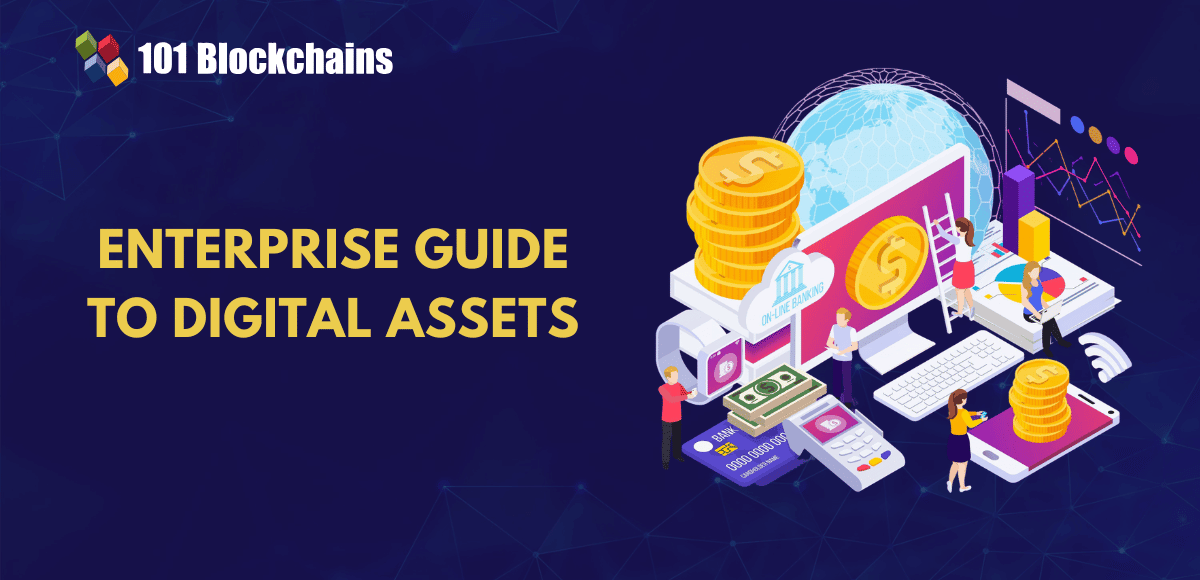
Digital asset management in enterprise has always pointed towards centralized systems used to store, organize and retrieve digital files, such as videos, images, graphics, audio files and documents. Till now, digital assets included only the files that are indispensable for branding, marketing and content creation. The definition of enterprise digital assets is changing slowly with the growing use of cryptocurrencies, NFTs and real-world asset tokenization. Is digital asset adoption a good decision for your business?
You should know that the revenue in the digital assets market is likely to reach $121.8 billion in 2026 (Source). In addition, institutional adoption of digital assets is improving with around 59% of institutions looking forward to allocate 5% of their assets under management to cryptocurrencies in 2026 (Source). The confidence in market infrastructure for digital assets and growing maturity of regulatory frameworks are great indicators for enterprises to embrace digital assets. It is important to learn about the different types of digital assets and what enterprises should expect from them in 2026.
Understanding the Definition of Enterprise Digital Assets
The term ‘digital assets’ in the context of business focused largely on creative assets used for marketing and content creation. However, the answers to “What are digital assets in business?” have shifted towards a new direction since the arrival of cryptocurrencies. The definition of digital assets has extended beyond words, audio files, videos, images and documents of a business. Digital assets are now considered as digital records or value stored or tracked with the help of distributed ledger technology or blockchain.
The digital records can represent anything associated with traditional forms of value, including stocks, patents and real estate. In addition, digital assets on blockchain networks can also represent things that have intangible value, such as creative resources. If an enterprise wants to adopt digital assets, which ones will be the ideal choice for long-term success?
Build your identity as a certified blockchain expert with 101 Blockchains’ Blockchain Certifications designed to provide enhanced career prospects.
Unraveling the Notable Variants of Digital Assets for an Organization
The race for adopting digital assets may have led many large enterprises to choose different types of digital assets. You should know about the different categories of digital assets that enterprises can incorporate in their business and operational workflows. Here is a breakdown of the notable subcategories of digital assets that can revolutionize enterprise digital asset management.
1. RWA or Real-World Asset Tokens
The biggest trend in the digital asset space, especially for enterprises, is the growing popularity of RWA or real-world asset tokens. RWA tokens help in representing the ownership of tangible and intangible asset, including real estate, commodities and business revenue streams.
Real-world asset tokenization brings a revolution in enterprise digital asset management by facilitating asset ownership on blockchain. The RWA tokens, backed by physical or tangible assets, can provide exposure to the associated assets in digital form.
One of the best things about RWA tokens for enterprises is the ability to serve as a channel for capital. You can think of them as something similar to traditional securities offerings, where you will receive digital tokens instead of stock certificates or notes.
Notable Traits of RWA Tokens
Organizations that wish to adopt digital assets should know how RWA tokens add value to their bottom-line. Business leaders must know the crucial traits of real-world asset tokens that make them the ideal choice in enterprise use cases.
- RWA tokens are subject to regulations established by governing bodies and should be issued and traded on authorized platforms.
- You will find features expected in traditional securities, such as dividends and voting rights, in RWA tokens.
- Real-world asset tokens are practically the digital versions of traditional and alternative investments.
Which Assets Can Be Converted to RWA Tokens?
If your business has decided to embrace RWA tokens, then it is important to identify the right assets to convert to RWA tokens. Enterprises can convert different types of real-world assets into RWA tokens, including,
- Real estate
- Bonds
- Stocks
- Private equity or debt
- Employee stock options
- Pre-IPO companies
- Creative assets of the brand
2. Central Bank Digital Currency and Stablecoins
The next big segment among digital assets suitable for enterprises points at central bank digital currencies or CBDCs and stablecoins. Both these assets are top choices for digital asset investment by enterprises, primarily for their stability. CBDCs and stablecoins use blockchain-based tokens to represent digital forms of currency, usually pegged against a reserve asset.
-
Central Bank Digital Currencies
Most of the definitions of central bank digital currencies or CBDCs describe them as on-chain tokens that represent a digital form of a fiat currency. The big difference between CBDCs and cryptocurrencies is that a CBDC is always centralized. The central monetary authority of a country issues the CBDC and takes responsibility for its regulation.
Stablecoins are a variant of cryptocurrencies whose value has been pegged against some external asset, such as the US dollar or gold prices. The use of a collateralization or pegging mechanism helps in achieving price stability of stablecoins. In addition, some stablecoins also leverage algorithmic mechanisms that involve purchasing and selling the reference asset and its derivatives.
Cryptocurrencies introduced a massive change in general perspective on enterprise digital assets and their utility. The diverse use cases of cryptocurrencies showed that organizations can have more than audios, images, videos and other creative assets in their collection of digital assets. Cryptocurrency is a medium of storing, creating and exchange value digitally on a blockchain with the help of cryptographic functions.
Key Traits of Cryptocurrencies as Digital Assets for Enterprises
You can determine the legitimacy of cryptocurrencies as ideal digital assets for enterprise use cases only by understanding their traits. The notable traits of cryptocurrencies will help you understand why enterprises have been adopting them.
- Cryptocurrencies don’t have inherent value like gold, real estate or fiat currencies.
- You will find cryptocurrencies solely in the digital form on blockchain networks.
- Cryptocurrencies are not subject to control by centralized entities as all transactions are secured and verified by a network of computers.
- The supply of cryptocurrencies is generally predefined and comes with a limit, with everything managed by code on blockchain.
Master the future of digital finance! Gain practical fluency in integrating stablecoins with DeFi platforms, smart contracts, crypto wallets, and cross-border payments in the Stablecoins Mastery Course.
How Can Enterprises Use Cryptocurrencies?
The best way to understand how enterprises can use their digital asset crypto strategies will require identifying cryptocurrency use cases. Enterprises can use cryptocurrencies for,
- Payments
- Foreign exchange
- Lending, borrowing and yield farming
- Cross-border payments and remittances
- Investments
Which Trends Will Boost Digital Asset Adoption in 2026?
The overview of different digital assets suitable for enterprise adoption reveals how each type of digital asset delivers value. Interestingly, the year 2026 will bring many new opportunities for adoption of digital assets. You should keep an eye on the following trends to track the future of digital assets in 2026.
-
Regulatory Clarity Becomes Mature
The most noticeable accelerator for adoption of digital assets will be regulatory clarity. Countries like Singapore and the UAE have been the frontrunners in digital asset regulation in 2026. In addition, the US and Europe are also leading efforts in establishing regulatory guidance for digital assets.
Stablecoins have emerged as prominent enterprise digital assets with the ability to bridge the gap between fiat and decentralized systems. The growing transaction volume of stablecoins signals a rise in use cases, especially in crypto trading. At the same time, it also showcases a promise for institutions to explore payment options with stablecoins.
-
Rising Demand for Tokenization
Tokenization of real-world assets gained momentum in 2025 and the same momentum will continue in 2026. Traditional financial institutions have shown their confidence in potential of tokenization to facilitate fractional, tradable and programmable digital representation of various assets. Tokenization is all set to shift various asset classes, including funds, bonds and real estate to blockchain networks and bring new investment opportunities.
Final Thoughts
The insights on notable variants of digital assets that enterprises can adopt in 2026 showcase their immense potential for business. Real-world asset or RWA tokens bring a completely new definition to digital assets for enterprises with the flexibility to shift almost anything to blockchain. CBDCs and stablecoins provide digital assets with the assurance of stability while cryptocurrencies open new opportunities for cross-border transactions. Learn more about digital assets and how they can add value to your business now.
