
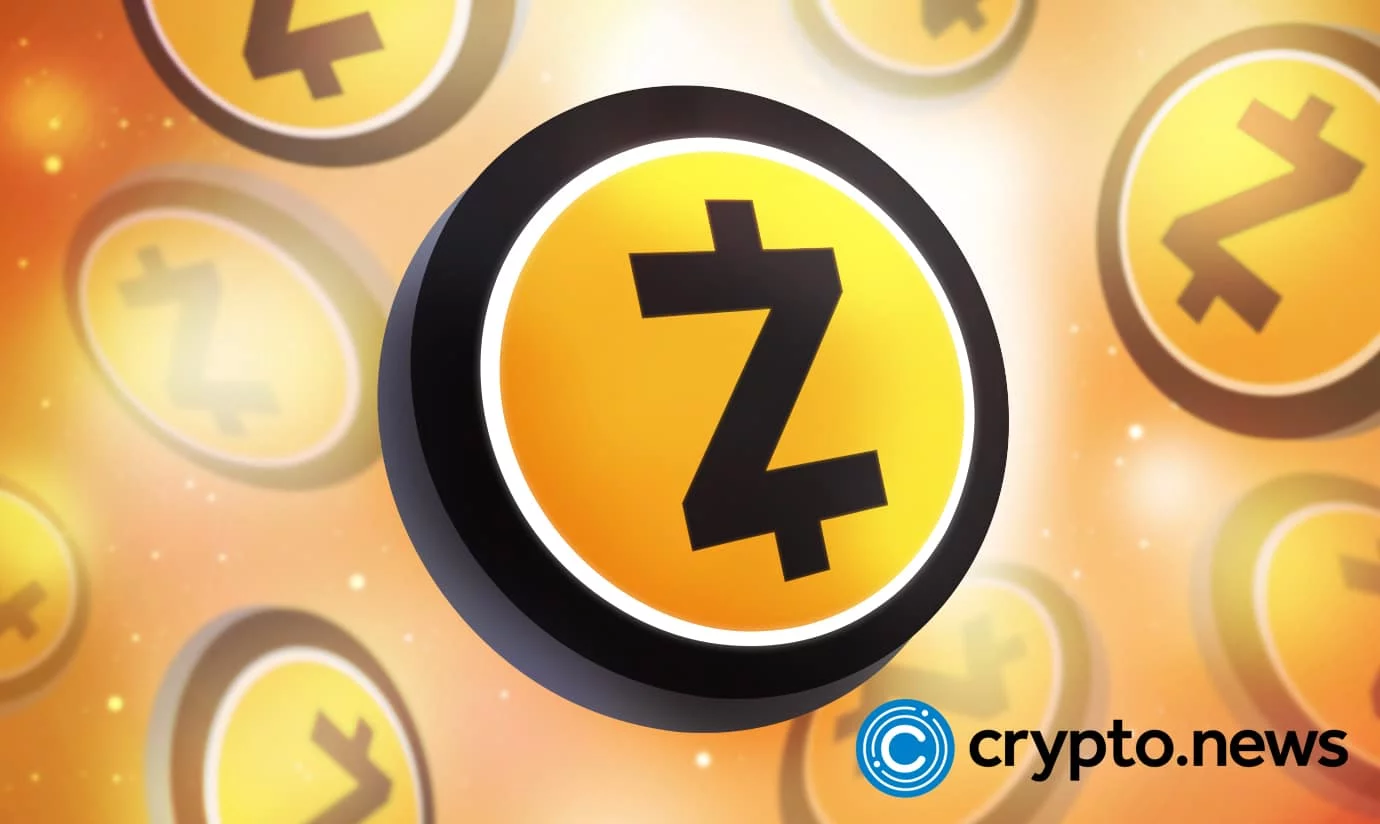
Here is the puzzle. On May 29, 2026, a security researcher hired by Zcash developers found a critical bug in the network’s Orchard privacy pool, a flaw that could have let an attacker mint unlimited, undetectable counterfeit ZEC.
The development team moved fast: they disclosed it, coordinated an emergency fix, disabled the vulnerable component within days, and re-enabled it with a patched circuit through a hard fork by June 1. No funds were stolen.
No inflation was detected. By almost any standard of incident response, this was a model of how to handle a critical vulnerability. And the market punished ZEC anyway. The token, which had been trading above $600 earlier in the week, has crashed roughly 45% to around $314, wiping more than $3 billion off its market value. The bug was fixed, and the price collapsed regardless.
Summary
- Zcash fixed a critical Orchard bug that could have allowed unlimited counterfeit ZEC, but the token still fell about 45% as investors questioned whether the flaw had been exploited before it was discovered.
- Developers said there is no cryptographic way to prove the vulnerability was never used during the four years it remained hidden, leaving uncertainty over the network’s supply integrity.
- The incident has renewed debate over the trade-off between privacy and auditability, a challenge that extends beyond Zcash to the wider privacy coin sector.
Understanding why reveals something fundamental about privacy coins that the celebratory “we patched it” framing misses entirely. This piece explains the paradox, and what it means for every privacy coin, not just Zcash.
What the bug was
To grasp why the fix did not save the price, you first need to understand what the bug actually threatened.
The vulnerability lived in Orchard, Zcash’s most advanced privacy pool, specifically in the cryptographic circuit that makes its shielded transactions work. Zcash’s whole purpose is private transactions: using zero-knowledge cryptography, it lets users send and receive funds without revealing addresses or amounts.
Orchard is the engine that delivers that privacy. The bug was a flaw in that engine, and its consequences were severe. As Shielded Labs, the nonprofit developer that disclosed it, described, the flaw could have allowed an attacker to create an unlimited number of counterfeit ZEC tokens, completely undetected.
The cleanest analogy comes from the disclosure itself: think of it as someone secretly gaining access to the Federal Reserve’s dollar printing press, except in this case, even the Fed could not tell the extra dollars had been printed. A security engineer named Taylor Hornby, brought on specifically to hunt for protocol vulnerabilities, found the flaw on May 29 using an advanced AI model to conduct a targeted review of the Orchard circuit.
He wrote a complete working exploit and confirmed that, in a local testing environment, it generated unlimited, undetectable counterfeit ZEC. Shielded Labs stated plainly that if the same tool had been run on the live Zcash network, it would have produced counterfeit tokens in the attacker’s wallet.
This is about the worst kind of bug a cryptocurrency can have. The entire value proposition of a fixed-supply digital asset rests on the supply being exactly what everyone believes it is. A flaw that lets someone secretly mint unlimited counterfeit coins attacks that foundation directly. So the severity was real. But severity alone does not explain the crash, because the bug was caught and fixed before any known exploitation. The explanation lies in two words: “undetected” and “undetectable.”
The fix worked. So why did it crash?
By the numbers, the response was a success. The flaw was found by the team’s own hired researcher before any malicious actor was known to have used it. It was disclosed responsibly. It was patched within days through coordinated emergency action. Some analysts even framed the episode as cautiously bullish, evidence that Zcash’s developers could rapidly coordinate a critical security fix without funds being stolen or inflation occurring. Robust crisis management, in other words.
And yet the market did the opposite of rewarding it. The reason is a problem the fix could not touch, and Shielded Labs was admirably honest about it. Because of Orchard’s privacy properties and the nature of the bug, there is no definitive way, using cryptography alone, to determine whether the flaw was exploited before it was discovered and fixed. The developers patched the door, but they cannot prove no one walked through it during the four years it was unlocked. They themselves stressed this uncertainty rather than hiding it.
That is the crux of the paradox. With a transparent blockchain like Bitcoin, if a similar bug were found, auditors could examine the public ledger and verify whether the total supply matched what it should be. The transparency that privacy advocates often criticize is exactly what would allow a clean “we checked, no counterfeits exist” conclusion.
Zcash cannot do that. The shielded transactions that protect users by hiding amounts and addresses also hide whether counterfeit coins were created. The privacy is the feature, and in this moment, the privacy is the problem. You cannot audit what is designed to be unauditable.
So the market was not reacting to the bug, which was fixed. It was reacting to the permanent, unresolvable uncertainty the bug exposed. Investors were asked to hold a token whose supply integrity can never be fully proven, in the specific knowledge that a counterfeiting vulnerability existed undetected for four years. The fix addressed the future. It could do nothing about the doubt it cast over the past, and that doubt is what crashed the price.
Four years is the part that stings
The detail that turned a serious situation into a confidence crisis is the timeline. The bug was not introduced last month. It had been present since Orchard’s activation in May 2022. It existed, undetected, for four years.
This matters for two reasons, and both are corrosive to trust. The first is the obvious one: four years is a long window. Even if exploitation is unlikely, the sheer length of time during which the flaw sat open expands the space of “what if.” Anyone who used Orchard over those four years operated on a system that could, in theory, have been compromised, and there is no way to retroactively verify it was not. The longer the window, the harder it is to wave away the possibility with “it was probably never exploited.”
The second reason cuts deeper. The bug evaded years of scrutiny by experienced cryptographers. Zcash is not an obscure project; it is one of the most respected privacy coins, built and reviewed by some of the most capable cryptographers in the industry. That such a severe flaw survived four years of that scrutiny, and was found only through a deliberate, AI-assisted hunt by a specifically hired researcher, raises an uncomfortable question.
If a bug this serious could hide for four years in a system this heavily reviewed, what confidence can anyone have that there are not others? Shielded Labs is now pursuing formal verification, a mathematical proof that no further bugs exist in the Orchard circuit, precisely because the four-year miss shattered the assumption that expert review was sufficient.
Shielded Labs makes a reasonable case that exploitation probably did not happen. The bug evaded everyone for years and surfaced only with cutting-edge tools and a skilled researcher working deliberately to find it, then was fixed quickly, leaving little window for anyone else to have found and used it in the gap.
As they put it, they think their researcher “probably succeeded” in finding it before any malicious actor. But notice the language. “Probably.” In a system built on cryptographic certainty, the best the developers can honestly offer about the supply is a probability, and markets pricing a privacy asset do not like paying full price for “probably.”
What it means for every privacy coin
The Zcash episode is not just a Zcash problem. It exposes a structural tension that sits at the heart of every privacy-focused cryptocurrency, and that is why it deserves attention beyond ZEC holders.
The tension is this: privacy and auditability are in direct conflict. The more completely a coin hides its transactions, the more completely it also hides whether its supply is sound. A fully transparent chain can always prove its supply integrity by public inspection, at the cost of user privacy. A fully private chain protects its users absolutely, at the cost of ever being able to prove, to a skeptic, that no counterfeiting has occurred.
This is not a flaw in Zcash’s implementation that better engineering eliminates. It is a fundamental trade-off baked into the concept of private money. Monero, the other major privacy coin, faces the same structural reality: its privacy guarantees are also its auditability limits.
What Zcash is now attempting is the industry’s most serious effort to thread that needle, and it is worth watching. Shielded Labs has proposed a network upgrade that would let anyone independently verify the integrity of the ZEC supply, involving a new shielded pool and “turnstile” accounting that tracks coins moving out of the compromised Orchard pool.
The goal is to restore provable supply integrity without abandoning privacy. If it works, it could become a template for how privacy coins handle the auditability problem. If it proves clunky or incomplete, it will underline how hard the trade-off is to escape. Either way, Zcash is being forced to solve in public a problem the entire privacy-coin category has mostly been able to ignore.
The market’s reaction also surfaced a colder truth about privacy coins as investments. The selloff was sharpened by news that a prominent privacy-coin holder, BitMEX co-founder Arthur Hayes, sold his entire ZEC position. When a flagship holder exits over an unresolvable supply question, it signals that even sophisticated believers have a limit to how much “probably fine” they will tolerate. For a privacy coin, trust is not a soft attribute; it is the entire product, because you cannot verify the thing yourself. Once that trust takes a hit that cannot be cryptographically repaired, the discount can be severe and durable.
The honest read
Zcash did almost everything right and still got punished, and that is the lesson worth sitting with.
The developers hired a researcher to hunt for exactly this kind of flaw before attackers could. The researcher found it. The team disclosed it transparently, fixed it within days, and is now proposing a supply-integrity upgrade and pursuing formal verification to prevent a repeat. As a piece of security response, it is close to a best-case playbook, and in a transparent system it might even have been a confidence-building moment, proof the network’s defenses worked.
But Zcash is not a transparent system, and that is the whole point. Its privacy, the feature that gives it its reason to exist, is also what makes it impossible to prove the bug was never exploited during the four years it existed.
The crash from above $600 to around $314 is the market pricing of that unresolvable uncertainty: not the bug itself, which is gone, but the permanent doubt it cast over a supply that can never be fully audited. The four-year window made the doubt larger, and a flagship holder’s exit made it concrete.
For ZEC specifically, the path back runs through the supply-integrity upgrade. If Shielded Labs can deliver a credible way to verify the supply independently, some of the fear should fade, because the core wound, unprovability, would begin to heal. If it cannot, the discount may persist as a permanent risk premium on an asset that asks you to trust what you cannot check.
For the broader privacy-coin category, the episode is a reminder that the privacy guarantee and the supply guarantee are two sides of the same coin, and you cannot strengthen one without weakening the other.
Zcash just learned, in public and at the cost of $3 billion, what that trade-off looks like when it goes wrong. The bug is fixed. The question it raised is not, and may never be.
This article is for informational purposes and does not constitute financial or investment advice. Cryptocurrency markets are highly volatile. The figures and analysis described reflect data available as of June 5, 2026. Always do your own research and consult with qualified financial professionals before making investment decisions.
