
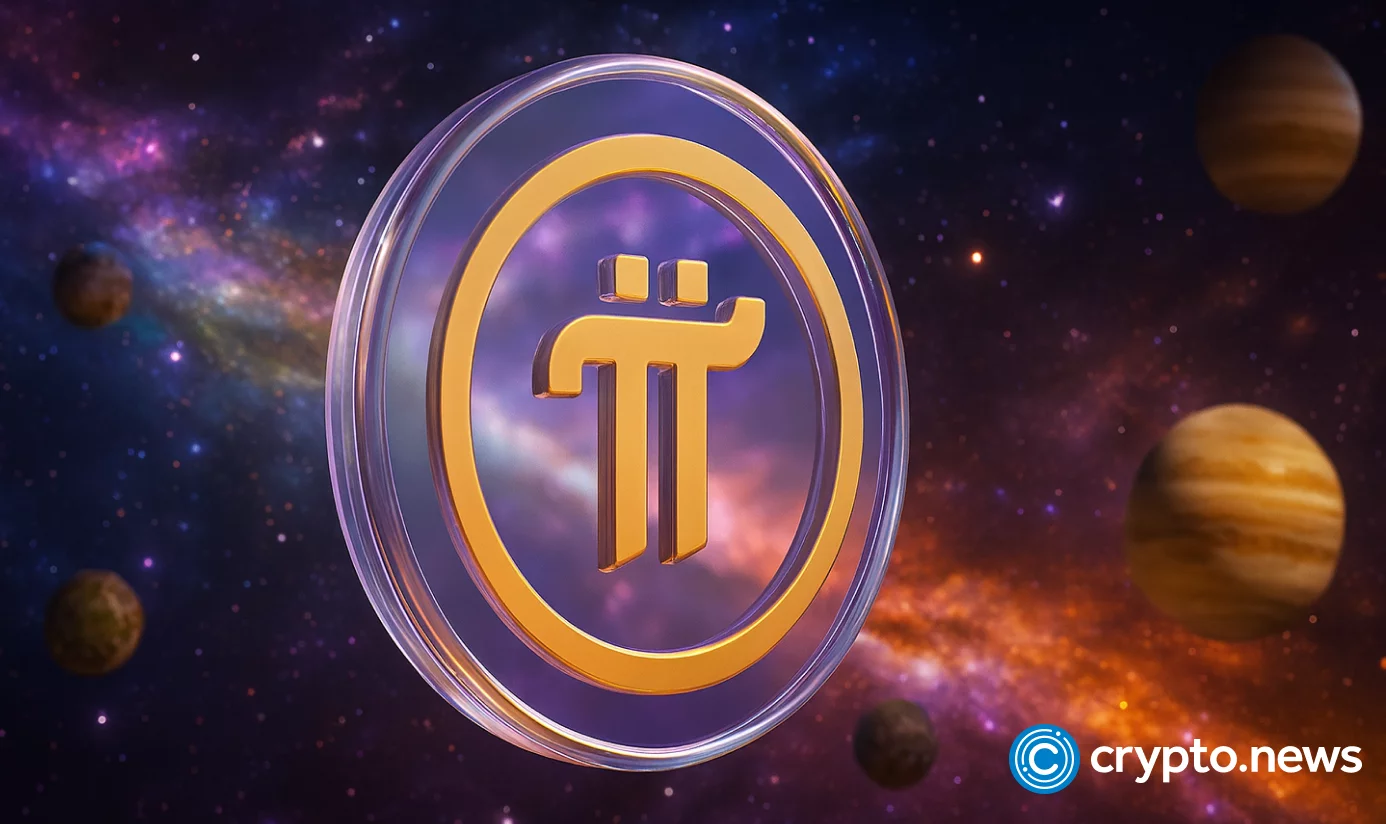
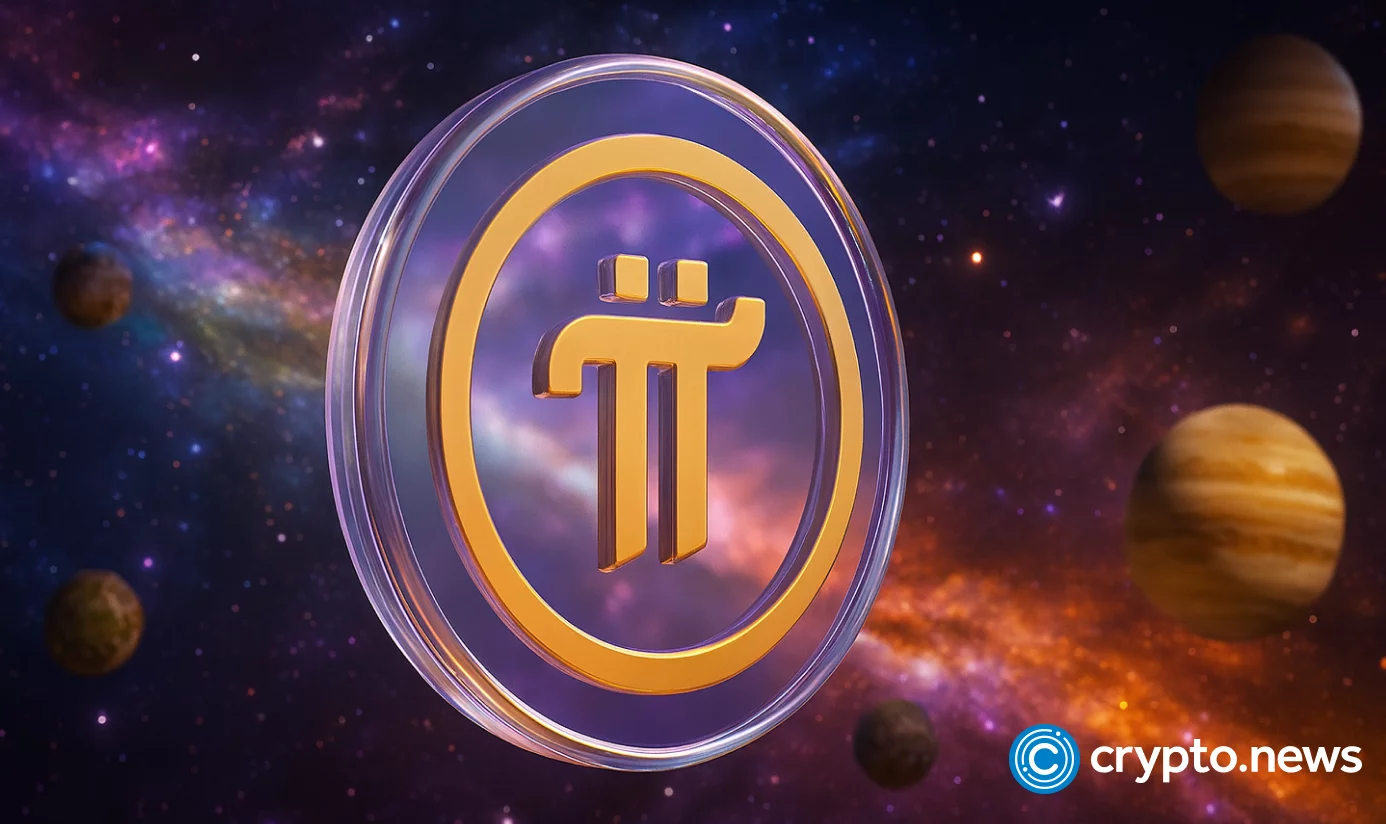
For most of Pi Network’s history, the same question has dominated community discussion: when do the biggest exchanges list PI? The answer has been arriving in pieces. Kraken began spot trading on March 13, 2026. OKX opened US access three days ago. Coinbase has said nothing. Binance ran a community vote in early 2025 and never acted on it, and the reasons why are now becoming clearer.
Summary
- Kraken listed PI for spot trading in March 2026, giving Pi Network its first major U.S.-regulated exchange listing. OKX opened PI access to U.S. users in May, strengthening Pi’s tier-1 exchange exposure within two months. Binance remains silent despite strong community support, with concerns around code transparency, audits, and decentralization still unresolved. Coinbase has not moved on PI, likely due to U.S. regulatory uncertainty and the token’s unclear legal classification.
Each major exchange has different requirements, and Pi sits differently against each one. This is what’s actually happening, and what would have to change for the last two big names to follow.
What’s actually happened so far
The picture has shifted significantly in the last ten weeks, and most coverage of Pi’s exchange access is now out of date. Here is the actual state of play as of late May 2026.
Kraken listed PI for spot trading on March 13, 2026, the day before Pi Day. The PI/USD pair went live at 3 PM UTC. This was Pi’s first listing on a major US-regulated exchange, and it followed Kraken’s earlier launch of PI perpetual futures in 2025 and the formal addition of PI to its 2026 spot roadmap in February. PI rallied roughly 30 percent during the announcement window before settling.
OKX opened US access to PI on May 21, 2026. OKX had listed PI globally on day one of Open Mainnet in February 2025, but US users were locked out by geographic restriction. The May announcement removed that restriction, giving compliant US traders direct access to PI through one of the largest spot venues in the world. Pi Core Team confirmed the change in a post on X the same day.
Binance has not listed PI. A community vote held by Binance in February 2025 produced what the exchange itself called overwhelming support, with the most-cited figure being 86.8 percent of voters in favor and around 226,000 votes cast. The exchange did not act on the vote at the time and has not made a public commitment since. The silence is now more than fifteen months long.
Coinbase has not listed PI. Unlike Binance, Coinbase never ran a vote, never issued a public statement, and never engaged the project publicly. The exchange’s approach to listings is uniformly more conservative than Binance’s, and PI has not entered its public listing pipeline in any visible way.
Bybit has actively refused. CEO Ben Zhou publicly labeled Pi a scam in early 2025, citing a 2023 Chinese police warning. Pi’s team disputed the framing. Bybit has not changed its position.
The net effect, as of late May 2026, is that PI has picked up meaningful exposure to US-regulated trading venues for the first time since launch, but the two largest exchanges in the world stay on the sidelines. The reasons are not random, and understanding them requires looking at what each exchange actually requires to list a token.
Kraken: the first tier-1 listing, and what it took
Kraken’s path to a PI listing was visible months before it happened. The exchange had launched PI perpetual futures in 2025, giving traders derivative exposure to the token even as spot trading stayed on smaller venues. In February 2026, Kraken added PI to its 2026 asset listing roadmap alongside other candidates including Conflux and Pepecoin. The official spot listing came on March 13.
Why Kraken first? Three factors are usually cited.
The first is Kraken’s listing posture, which sits in the middle of the tier-1 spectrum. The exchange is more conservative than Binance but more aggressive than Coinbase, and its listing process is generally faster than Coinbase’s multi-stage review. Kraken added more than 30 new assets to its roadmap in early 2026, signaling a broader appetite for emerging tokens.
The second is the structural progress Pi had made by early 2026. The mandatory v20.2 protocol upgrade completed on March 12, the day before Kraken trading began. The Pi DEX launched the same day. Pi was approaching its first Open Mainnet anniversary with eighteen million migrated users and a documentable record of shipping. From an exchange-due-diligence standpoint, there was more to evaluate than there had been twelve months earlier.
The third is the derivatives precedent. Kraken had already integrated PI for futures trading. The exchange already had operational experience with PI pricing, liquidity behavior, and the underlying token. A spot listing was the natural extension, not a cold start.
The market reaction was instructive. PI rallied roughly 30 percent during the announcement period. Within hours of trading going live, exchange supply hit a record 451 million PI as miners moved tokens to capture the new liquidity. The pattern echoed the OKX day-one experience from February 2025, where initial euphoria was followed within 24 hours by a roughly 21 percent reversal as early miners sold. By late May 2026, PI trades around $0.15, well below its post-Kraken peak.
The lesson from Kraken’s listing is not that a tier-1 listing automatically pumps the price. It is that tier-1 access is a structural gain (legitimacy, broader liquidity, US user reach) that can coexist with significant short-term selling pressure. Both Kraken bulls and Kraken-disappointed holders were working from incomplete frameworks. The listing was real. The follow-through depended on what else happened in the ecosystem.
OKX US: the listing nobody saw coming
The OKX US announcement on May 21 was, in some ways, more significant than the Kraken listing itself. OKX is one of the three or four largest spot venues in the world by volume, and the absence of US access had meant PI’s global liquidity was structurally split between US-restricted and non-US users.
What changed was OKX’s compliance posture, not Pi’s. The exchange has been expanding its US-regulated footprint through 2025 and 2026, and PI joined a broader queue of tokens being opened to US users (Pi was listed on the same week as several other assets). For Pi specifically, the timing mattered: with Kraken having gone first in March, the OKX US move added a second tier-1 US-regulated venue inside two months. The cumulative effect is meaningfully different from either listing alone.
The market reaction to OKX US was muted. PI did not stage a major rally on the announcement, which the CryptoTimes coverage noted explicitly: “Despite new exchange listings from OKX and Kraken, Pi’s price and trading volume remain weak, showing limited short-term market reaction.” Several factors explain the lukewarm response. The Kraken listing had absorbed much of the “first US tier-1” narrative two months earlier. Token unlock pressure kept building through Q2 2026 as more users migrated to Mainnet. And the broader crypto market was in a corrective phase, with Bitcoin trading in the high $70K range and altcoin appetite generally compressed.
But the structural significance is still there. Pi now has two regulated US spot venues. The argument that PI is inaccessible to American traders, which had been the single most common reason cited for institutional caution, no longer holds. What that means for the next exchange in line is a more interesting question.
Binance: what the community vote actually told us, and what it didn’t
Binance’s February 2025 community vote is one of the most-cited and most-misread events in Pi’s exchange history. It is worth being precise about what it was.
Binance routinely runs community polls to gauge listing interest. These are not commitments. They are data points the exchange uses, alongside its own internal due diligence, to inform listing decisions. A strong community vote signals demand. It does not bind the exchange to act, and it never has. Several other tokens that won Binance community votes have not been listed. PI is the highest-profile case, but it is not unique.
For PI specifically, the vote produced 86.8 percent support across roughly 226,000 voters. Binance did not move forward. Fifteen months later, the project has shipped a mandatory protocol upgrade, completed Pi DEX activation, launched smart contracts (Protocol 23 on May 11, 2026), and gained tier-1 US exchange access through Kraken and OKX. Binance has still not acted.
The honest analysis of why traces to specific, identifiable requirements, not abstract ones. Multiple analysts (most prominently Kim H. Wong on X, but also pieces in Cointribune, Coinpedia, and others) have surfaced what appear to be Binance’s actual concerns. Three issues come up again and again.
Code transparency. Pi’s blockchain code is described by critics as not fully open-source. Binance has, in recent years, become more cautious about listing tokens whose underlying code is not fully verifiable by third parties. The exchange has paid a $4.3 billion settlement with US authorities and operates under heightened compliance attention. Listing a token where the codebase cannot be independently audited represents a level of risk Binance now generally avoids.
Third-party security audit. Pi has not, to public knowledge, completed a comprehensive third-party security audit of the kind Binance now expects from listing candidates. Some smaller audits and integrations exist (Chainlink, for instance), but the full audit footprint is not visible.
Governance and decentralization. Pi’s network is still substantially under Core Team control. The validator set, the protocol upgrade process, and the distribution of tokens are all heavily influenced by the team. For an exchange whose own listing criteria emphasize decentralization as a positive signal, this is a real friction point.
Some Pi community members have argued the more cynical version of the analysis: that Binance views Pi’s mobile-first user base as a long-term competitive threat to its own retail crypto franchise, and has no incentive to legitimize a project whose entire pitch is to bring users into crypto without going through exchanges like Binance. There is no public evidence to support or refute this, but it is worth noting as a hypothesis the community itself has raised.
Predictions from analysts and AI models surveyed in late 2025 placed the probability of a Binance listing in 2026 at roughly 25 to 50 percent. The reasoning was generally consistent: a listing is plausible if Pi addresses the code transparency and audit gaps, and significantly less plausible if it does not. Neither has, to public knowledge, been resolved in the months since.
Coinbase: the silent exchange
Coinbase is the harder case to analyze, because there is so little to work from.
Coinbase has never run a community vote on PI. The exchange has never issued a public statement on the project. It has not added PI to any visible roadmap, listing review, or pipeline. The silence is consistent with Coinbase’s general posture: the exchange has historically listed fewer than half the tokens Binance lists, runs a longer and more conservative internal review process, and rarely comments on projects it is not actively considering.
What can be said about Coinbase’s listing requirements is what the exchange has said publicly through its asset review framework. Coinbase requires regulatory clarity in the asset’s jurisdiction of origin, demonstrable technical maturity, comprehensive security review, transparent governance, and (typically) some history of trading on other regulated venues. PI now satisfies the last of these, post-Kraken and post-OKX US.
The asset review framework also weights US securities law considerations heavily. This is the area where PI’s path is least clear. PI’s status as a security or commodity under US law is not formally settled. The CLARITY Act, which would put much of US crypto market structure into federal statute, has cleared committee in May 2026 but is not law. Until CLARITY passes, or until the SEC and CFTC issue formal guidance specifically addressing PI, Coinbase has no clear regulatory framework to lean on for a listing decision.
This is the unstated reason most likely to explain Coinbase’s silence. The exchange settled with the SEC in 2024 and operates under particularly tight regulatory scrutiny. Listing a token of contested status, no matter how popular, is a level of risk Coinbase has not been willing to take. If CLARITY passes and assigns PI a clear regulatory category, Coinbase’s posture could change quickly. Until then, the exchange is unlikely to move.
For the Pi community, this means the Coinbase question is less about Pi’s project execution and more about US legislative timing. That is not a comfortable framing for a token whose holders want listings now, but it is the structurally honest one.
What would have to change
Stepping back from the individual exchanges, the path to broader tier-1 listings is now clearer than it was twelve months ago.
For Binance, three things would meaningfully move the probability. A formal third-party security audit of the Pi blockchain. Opening more of the codebase to public review. Demonstrable steps toward validator decentralization beyond the Core Team. Any one of these would address a stated concern. All three together would clear most of the visible obstacles. Whether the Core Team chooses to do any of them, and on what timeline, is the variable in Pi’s control.
For Coinbase, the variable is largely outside Pi’s control. The CLARITY Act’s passage or formal SEC/CFTC guidance classifying PI would resolve the regulatory ambiguity that explains most of Coinbase’s reluctance. If CLARITY becomes law in 2026 (the bill has cleared committee but still needs a Senate floor vote, House reconciliation, and presidential signature), the Coinbase question becomes substantially more tractable.
For Pi as a project, the next year is therefore one where exchange access splits into two distinct questions. The Binance question is about project execution: can Pi address the audit, transparency, and decentralization concerns? The Coinbase question is about US legislative outcomes: will CLARITY pass, and how will it classify Pi-class tokens? Both questions are answerable. Neither has an answer yet.
In the meantime, Pi already has more tier-1 exchange access than it did three months ago. Kraken handles US-regulated spot trading. OKX US covers the broader US-regulated venue. OKX international, Bitget, MEXC, Gate, and others cover global access. Bitfinex, HTX, and a long tail of smaller exchanges fill in the rest. The “no major exchange” framing that defined Pi’s listing narrative through most of 2025 is no longer accurate. What stays accurate is that the two largest exchanges have not moved, and the reasons they have not are now specific enough to track.
What this means for PI holders
For a Pi holder, the listing situation is more nuanced than a simple “waiting for Binance” story.
The structural gain from the Kraken and OKX US listings is already in. PI is accessible to US-regulated traders. Liquidity is deeper than it was in 2025. The legitimacy signal of two tier-1 listings is on the record. Whatever happens next, the floor of exchange access has been raised.
The market reaction to those listings has been muted, and that itself is informative. Tier-1 listings drove brief excitement and then absorbed selling pressure as miners cashed in on the new liquidity. The pattern is consistent with what supply-heavy tokens typically do when major listings arrive in a token-unlock environment. It is not a sign that listings are unimportant. It is a sign that listings alone cannot overcome the structural headwind of ongoing supply expansion against limited new demand.
The Binance and Coinbase questions are the two highest-impact catalysts left. A Binance listing would, by most analyst estimates, drive a meaningful price reaction, both because Binance is the largest spot venue and because it would resolve much of the legitimacy debate. A Coinbase listing would carry similar weight and would also implicitly resolve the US regulatory question by virtue of Coinbase’s compliance-first listing posture.
For now, the honest assessment is that PI’s exchange access has improved materially in 2026, that the two biggest names are still out of reach for identifiable reasons, and that the variables which would change either are now visible enough to watch directly. Binance moves on project execution. Coinbase moves on US regulation. The clock on both is running.
The Pi community has spent years asking when the tier-1 listings would come. The first one arrived in March. The second came twelve weeks later. What happens next is no longer a question of whether, but of which, and when. That is a different question, and a more answerable one, than the one Pi holders were asking a year ago.
This article is for informational purposes and does not constitute financial or investment advice. Exchange listing decisions and regulatory frameworks can change quickly; the figures and milestones described reflect reporting available as of late May 2026. Always do your own research.
